
Websites that build Bergen's position as a global maritime city

Client: One Ocean Week

We designed and developed websites for One Ocean Week and the collaborative project One Ocean, Havbyen Bergen.

Work: Web development and design, UX, UI, integrations

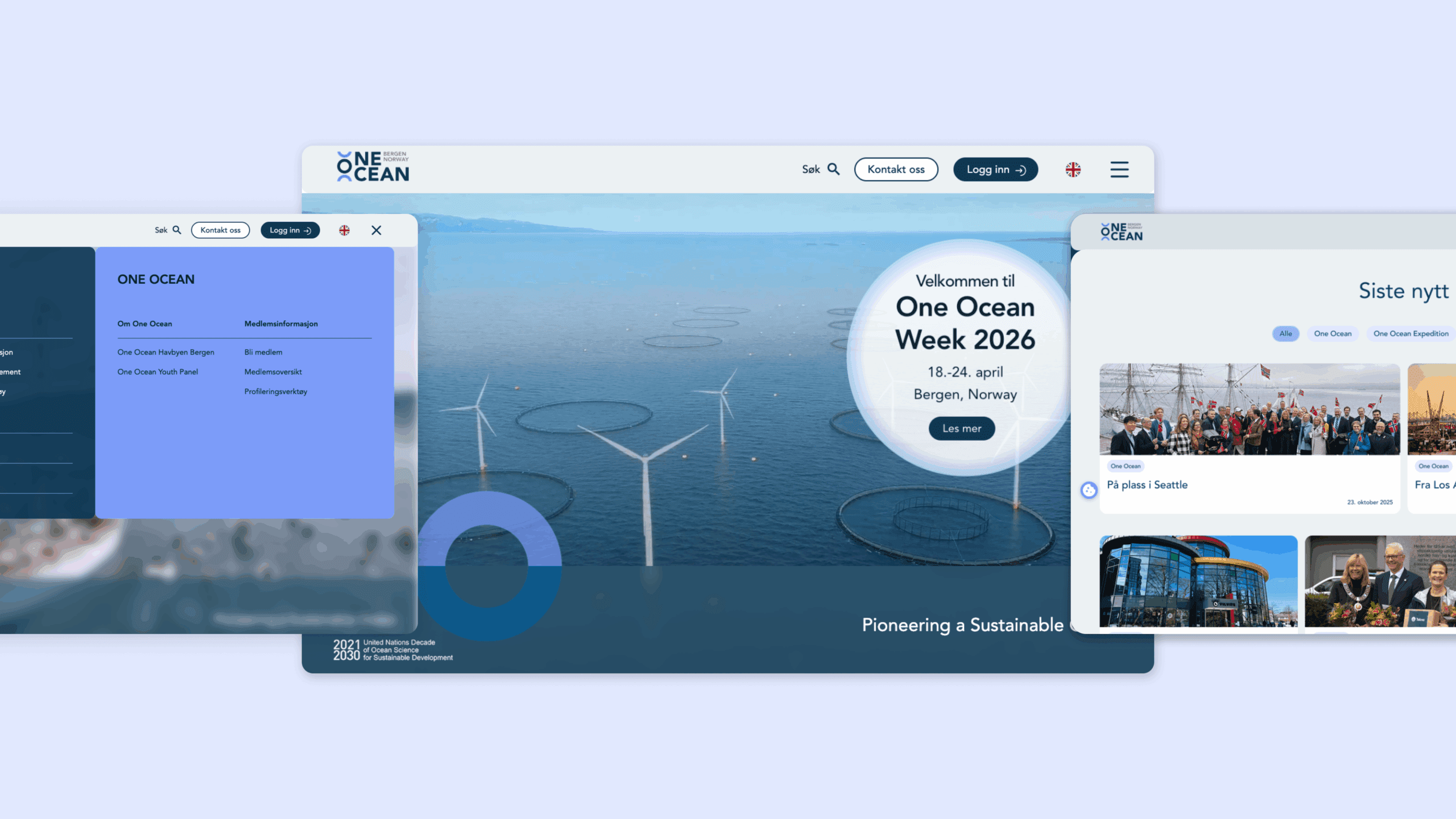
We have designed and developed websites that make it easy for One Ocean Week to promote events, build member networks, and highlight Bergen as a maritime city, Western Norway as a maritime region, and Norway as a maritime nation.

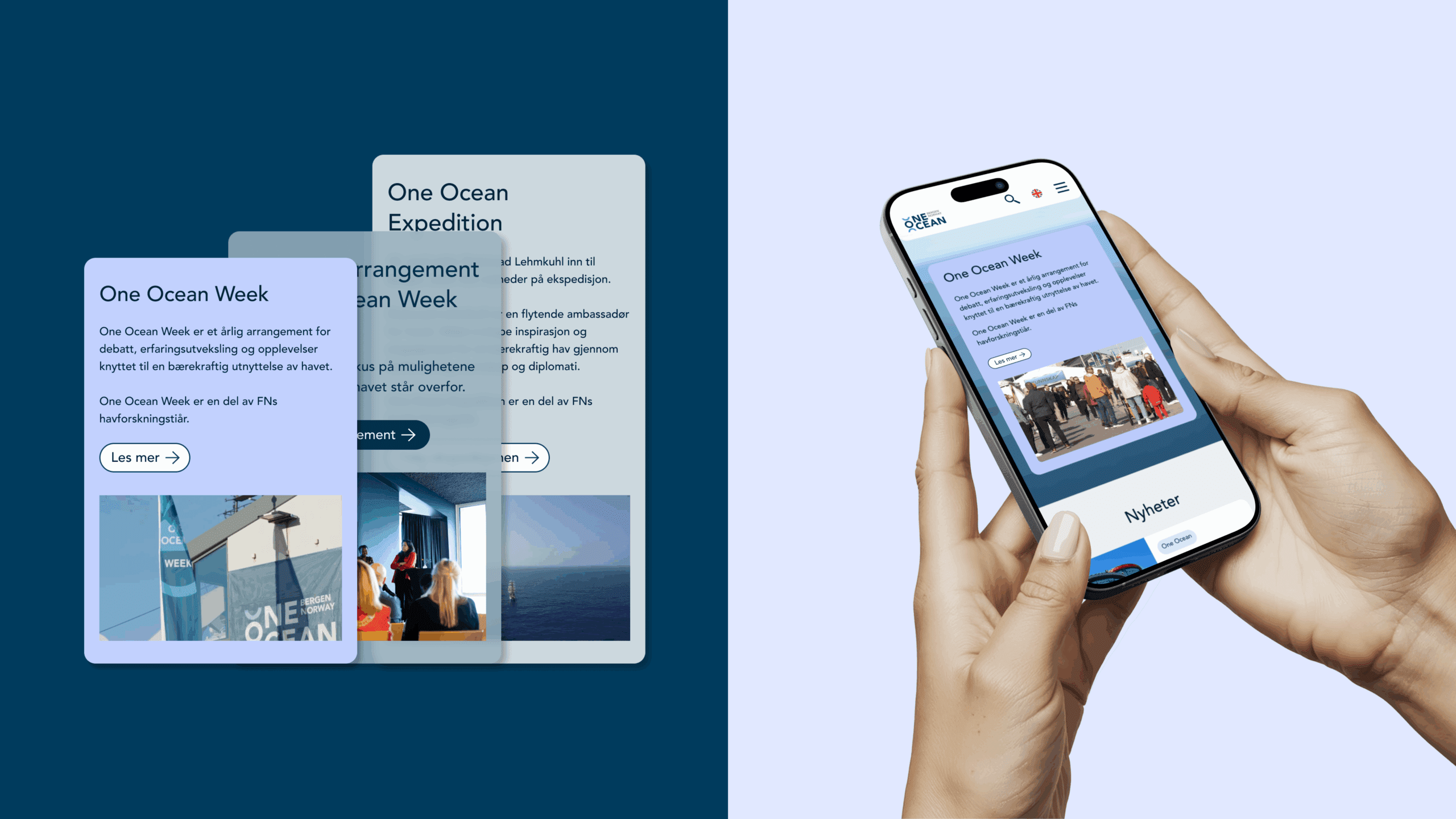
mockup showing the new One Ocean Week website on tablets and mobile phones
mockup showing the new One Ocean Week website

Background:

One Ocean Week is a major annual event in Bergen. The ocean week brings together researchers, the public, politicians, and industry for debate, exchange of experiences, and activities related to sustainable use of the ocean. One Ocean Week is an official part of the UN Decade of Ocean Science.

The event is organized by One Ocean, Havbyen Bergen, which brings together stakeholders from business, academia, and the public sector. The project, which is funded by the City of Bergen, Vestland County Municipality, and the University of Bergen, with active contributions from the Institute of Marine Research, consists of nearly 100 partners.

Previously, One Ocean Week and One Ocean, Havbyen Bergen each had their own website. Now they wanted to bring everything together under one umbrella. Among other things, the new websites had to:

  • Raise awareness and generate interest in One Ocean Week
  • Easily view all events during the week
  • Make it easy to submit events
  • Highlight members' activities and contributions to the collaboration
  • Promote cooperation within the network

Solution:

After an insight process involving workshops and gathering requirements from stakeholders, we built a website with a simple and clean design, but with enough structure and functionality to handle a complex program and many contributors.

1. Structure that simplifies complexity

www.oneoceanweek.com is organized to meet the needs of different target groups, with clear entrances for the public and organizers, and a structure that can accommodate changes and growth in the program over time.

2. Intuitive event registration

We designed a simple registration flow for organizers, with clear fields for required information. This not only makes the job easier for those who want to register events, but also for those who administer the program.

3. Clear event calendar that helps the public plan ahead

The program is presented in a clear calendar with distinct search criteria for day and type of event. This makes it easy for users to get an overview of what is happening throughout the week, find interesting events, and plan their week. Events can be marked as favorites and easily added to a private calendar.

Mockup showing the solution for submitting events on the new One Ocean Week website.
mockup showing the new One Ocean Week website

4. Member area for partners

For members of the One Ocean network, we built a dedicated member forum where they can communicate, share news and events, and find information about resource persons and other actors in the network.

5. Multilingual AI solution

We have integrated an AI solution for translating content. This means that administrators only need to enter the content once, in one language, to have fully updated pages in both Norwegian and English.

6. Secure and robust WordPress sites

The websites are built in WordPress, with a user-friendly layout and a technical foundation that streamlines operation and further development. WordPress is a flexible and user-friendly publishing system with a large ecosystem of extensions and features and a robust security foundation.

7. Clean, organic ocean design

One Ocean Week already had a strong and comprehensive design profile, which we built on to create a cohesive design system for the entire website.
The website features clean surfaces in a blue color palette. To give it identity without stealing attention from the content, we have incorporated moving elements inspired by maritime movement patterns such as waves and jellyfish. This helps to bring the different surfaces to life without disrupting the user experience.