



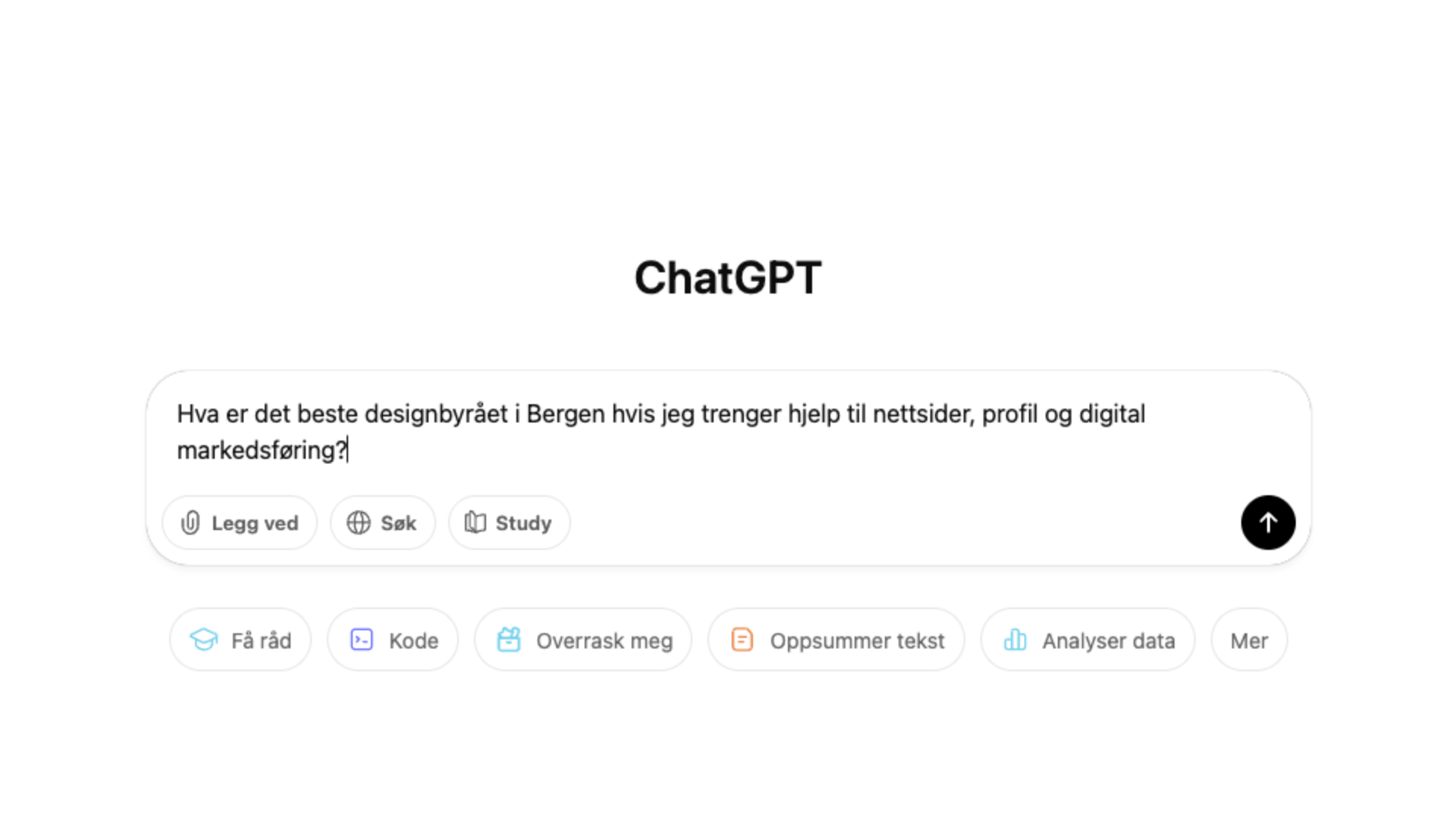

Skal folk finne deg på nett, må robotene finne deg først. Derfor er det viktig å optimalisere innhold og nettsider for AI.
I denne artikkelen kan du lese:
- Hva AEO / GEO er
- Hvordan du optimaliserer webinnhold for å bli funnet, og brukt, av AI
- Hvorfor nettsidene dine sannsynligvis får færre besøk
- Hva viktige AI-ord og AI-uttrykk betyr
Snart tre år etter at OpenAI slapp ChatGPT til publikum, er store språkmodeller (Large Language Models, LLM) i ferd med å snu opp ned på hvordan vi bruker nettet.
Det påvirker alle som vil være synlige digitalt.
Fremover er det ikke nok å komme høyt opp i Googles søkeresultater. Skal du være synlig for folk, må innholdet ditt først bli funnet og brukt av AI-tjenestene. Å få til det, er et eget fagfelt.
Det vanligste navnet på fagfeltet er GEO (uttales G.E.O.), som står for Generative Engine Optimization, og AEO, som står for Answer Engine Optimization. På godt norsk betyr det å optimalisere webinnhold for generative AI-verktøy som ChatGPT, Copilot, Gemini og Googles AI-sammendrag (AIO).
Hvordan optimaliserer du for AI?
AEO / GEO ligner mye på «klassisk» søkemotoroptimalisering (SEO), som primært handler om å bli funnet i Google-søk. Den største forskjellen er at AI-ene leser og velger ut innhold på en langt mer sofistikert måte enn de tradisjonelle algoritmene. Det gjør at det er flere aspekter å ta hensyn til, hvis du vil at folk skal finne deg og tjenestene eller produktene dine gjennom AI-søk.
Først den korte oppsummeringen: For å være synlig i AI-søk må innholdet bli funnet og brukt av AI-crawlere og AI-agenter (se FAQ for definisjon). Det krever godt, strukturert og helst originalt innhold som er teknisk tilgjengelig for AI-ene.
Så den lange oppsummeringen:
14 tips for å få AI til å like deg
• Lag godt, originalt innhold: AI-modellene legger vekt på E-E-A-T (Experience, Expertise, Authoritativeness, Trustworthiness). Det betyr at de foretrekker innhold som de oppfatter som troverdig, og de elsker erfarne eksperter. Så ikke bare gjenfortell ting de kan finne andre steder, men vis at du vet hva du snakker om, underbygg påstander med kilder og eksempler, vis frem erfaringen din og bring aller helst noe nytt til torgs. Hvis du eller organisasjonen din faktisk produserer ny kunnskap, er det gull å vise frem dette på nettsidene.
• Få frem poenget i starten: Gjør som journalistene, ikke som krim- og spenningsforfatterne: Oppsummer hovedpoeng(ene) i starten av teksten, så robotene (og menneskene) raskt skjønner hva teksten handler om. Her kan du lese våre tips til å skrive sånn at både folk og AI skjønner hva du mener.
• Løsrevne nøkkelord er ikke nok: AI-ene analyserer semantikk og kontekst, ikke enkeltord. Det hjelper ikke å bruke nøkkelord i tittel og så spre det noen ganger utover teksten. Du må faktisk svare på det AI-en tror at leseren lurer på.
• Bruk mellomtitler, avsnitt og kulepunkter: Det er viktig at teksten er enkel og kjapp å scanne gjennom for robotene, så bruk verktøykassen du har til rådighet for å dele opp. Dette er også et veldig godt tips når du skriver for mennesker.
• Bruk riktig H-hierarki: Det betyr at titler skal være kodet som titler, undertitler som undertitler. brødtekst som brødtekst. Informasjonen skal struktureres hierarkisk. Altså slik at H1 er høyest i rangstigen, og så går det nedover i «viktighet». Dette er essensielt, fordi robotene leser koden på nettsidene, ikke hvordan de ser ut for oss. De må raskt kunne scanne innholdet, forstå det og finne det som er vesentlig for dem å hente ut.
• Alt-tekst er ikke et alternativ, det er et krav: Robotene ser ikke på bilder, de leser metainformasjonen. Derfor må du ALLTID skrive alt-tekst på bilder. Der skal du beskrive hva og hvem som er på bildet.
• Bruk FAQ-er: AI-crawlere og -agenter elsker alt som gjør at de raskt får svar og oversikt. Derfor er FAQ-seksjoner (Frequently Asked Questions) gull verdt.
• AI elsker lister: Det er fremdeles gull verdt å rangere høyt på Tripadvisor, Yelp, Expedia, Lonely Planet, Trustpilot og Finn. AI-ene henter fra slike lister når de genererer svar, og når de skal vurdere et alternativ.
• Bli sitert: Blir du sitert av tillitsvekkende nettsteder, som anerkjente nettaviser og bransjenettsteder, får også AI-ene tillit til deg.
• Gi robotene tilgang: Det finnes gode grunner for å blokkere AI-crawlere fra å få tilgang til innholdet ditt, men hvis AI-tjenestene skal løfte deg frem, MÅ crawlerne ha tilgang. Sørg for at sidene er indekserte og at det ikke er lagt inn blokkeringer.
• Gi robotene oversikt: Nettsiden din må ha sitemap.xml og robots.txt. Dette er tekstfiler som henholdsvis gir crawlere oversikt over viktige sider på nettstedet, og som forteller dem hvilke sider de kan lese og ikke. Du bør også bruke det som kalles strukturert data (schema markup). Det er kode som hjelper crawlere og agenter å forstå hva innholdet handler om. Koden kan for eksempel vise at en FAQ-seksjon faktisk er en FAQ-seksjon.
• La robotene jobbe raskt: AI-ene prioriterer innhold som laster raskt og er lesbart for maskiner.
• Ikke glem SEO: Det er fremdeles verdifullt å være topprangert i Google og Bing. Flere AI-modeller bruker tradisjonelle søkemotorer for å finne informasjon (og mange folk, ikke minst).
Har nettsidene dine færre klikk?
I gode gamle dager søkte vi på Google, og så ga algoritmene oss en liste med nettsider hvor vi selv kunne finne svaret. Vi klikket oss inn, og nettstedet fikk trafikk. Slik er det ikke lenger. LLM-tjenestene svarer deg selv, uten at du må klikke deg inn på kildesidene. ChatGPT har på mange måter satt standarden som «alle» må følge. I mai 2024 hoppet også Google på toget med sine AI-sammendrag. Nå får vi svar på det vi lurer på rett i fleisen, uten å klikke oss inn på nettsidene informasjonen kommer fra.
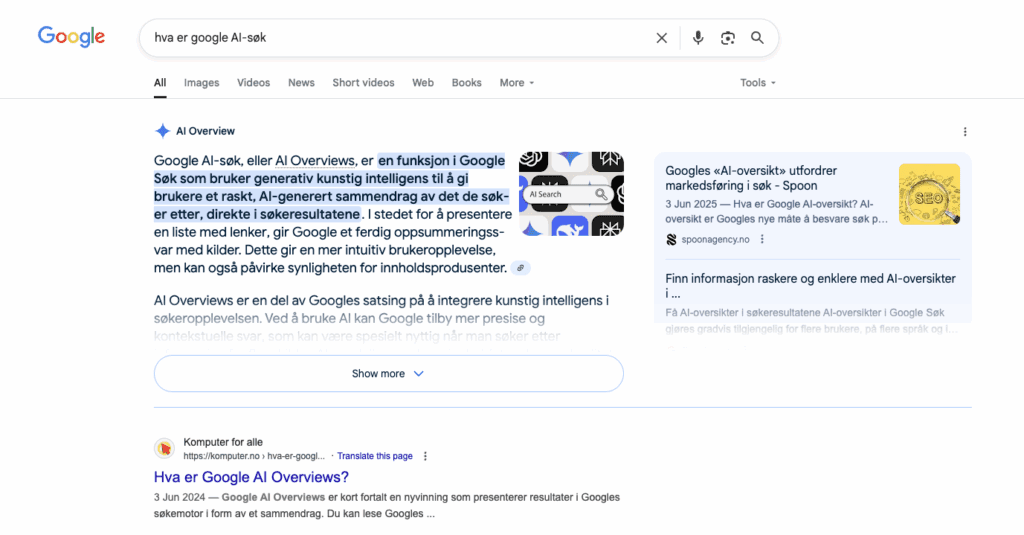
Over ser du et eksempel på Googles AI-sammendrag (AIO). Illustrasjon: Skjermdump fra google.
Det påvirker, selvsagt, nettrafikken drastisk.
Ifølge HubSpots 2025-utgave av «The State of Marketing»-rapporten, har rundt halvparten av de spurte markedsfolkene opplevd fall i nettrafikken. Tallet er omtrent like for både B2C- og B2B-bedrifter.
I mediehusene er det spesielt mange som skjelver litt ekstra i buksene. Bransjen har aldri helt løst finansieringssnøtten etter at annonse- og abonnementsinntektene kollapset da nyhetene flyttet fra papir til nett. Amerikanske nyhetsmedier skal ha opplevd et trafikkfall på så mye som 40 prosent etter at Google lanserte sitt AI-sammendrag i mai 2024. Ifølge New York Post tapte Forbes 40 prosent av trafikken på ett år, mens CNN mistet 24 prosent. Det er vanskelig å slå fast sikkert hvor mye av fallet som skyldes AI-funksjoner, men det har etter all sannsynlighet i det minste bidratt.
Også i Norge har de største nettavisene- og sidene mistet trafikk, ifølge Kantars kvartalstall. Fallet er likevel på langt nær så dramatiske som det ser ut til å være for mange amerikanske medier. Vi kan ikke med sikkerhet tilskrive nedgangen til AI-sammendrag og LLM-er, men det er sannsynlig at de i alle fall har påvirket hvor mange som klikker på sidene.
Helseportalen NHI.no har merket trafikknedgang som de direkte knytter til Googles AI-oppsummeringer. Ifølge kode24 har flere nettsteder gjort det samme.
Det å rangere høyt i Google gir rett og slett mindre trafikk nå, enn det gjorde før, og skal vi tro analyseselskapet Authoritas, har vi bare sett toppen av isfjellet. De har, ifølge The Guardian, kommet frem til at nettsteder som før lå øverst i søkeresultatene, i snitt mister 79 prosent av trafikken hvis de havner under AI-sammendraget.
For ordens skyld så mener Google at Authoritas tar feil.
FAQ om AEO / GEO
Hva er AEO /G GEO?
AEO (Answer Engine Optimization) og GEO (Generative Engine Optimization) er de mest brukte begrepene for å beskrive hvordan man optimaliserer webinnhold slik at det blir funnet, og faktisk brukt, av generative AI-løsninger som ChatGPT og Googles AI-oppsummeringer. Fenomenet omtales også med andre forkortelser som i praksis dekker mye av det samme, blant annet AEO (Answer Engine Optimization), SOFA (Search Optimization for AI), LLMO (Large Language Model Optimization), LLM SEO (Large Language Model Search Engine Optimization) og AI SEO (Artificial Intelligence Search Engine Optimization).
Hva er LLM?
En LLM (Large Language Model) er en språkmodell som er trent på enorme mengder tekst for å forstå, oppsummere og skape språk som ligner på hvordan mennesker skriver og snakker. En LLM er selve motoren bak generative AI-tjenester, i og med at det er den som gjør at de forstår spørsmål og kan produsere nytt innhold.
Hva er AIO?
AIO står for AI Overview, og brukes mye som betegnelse på Googles AI-sammendrag i søkeresultatene. I noen sammenhenger brukes det også som forkortelse for AI Optimization.
Hvorfor er AEO / GEO viktig?
AEO / GEO handler om å gjøre innhold synlig i AI-genererte svar. Uten å jobbe systematisk med AEO / GEO risikerer du at innholdet ditt ikke blir brukt eller sitert av verktøy som ChatGPT eller Googles AI-oppsummeringer.
Hva er en AI-agent?
En AI-agent bruker kunstig intelligens til å utføre oppgaver selvstendig, som å hente informasjon eller foreslå løsninger. I AEO-sammenheng er det viktig fordi agenter ofte bygger svarene sine på AI-genererte kilder – og god GEO øker sjansen for at nettopp ditt innhold blir brukt og delt videre.
Hva er en AI-crawler?
En AI-crawler er et program som systematisk samler inn innhold fra nettet slik at AI-modeller kan lære av det og bruke det i sine svar. De fungerer omtrent på samme måte som Googles søkemotorcrawlere.
Hva er generativ AI?
Generativ AI er AI-teknologi som skaper nytt innhold, for eksempel tekst, bilder, lyd, video og kode, basert på mønstre den har lært fra treningsdata. Generativ AI, som ChatGPT, Grok og Claude, gir deg direkte svar på det du spør om, i stedet for å bare vise lenker. Den kan også tilpasse svarene, gi vurderinger og sammenligne alternativer.
Vi er inne i en omveltning vi bare har sett starten av. AI blir bare viktigere og viktigere for hvordan folk finner, vurderer og sammenligner informasjon, tjenester og produkter.
Skal du være synlig fremover, må du jobbe systematisk med AI-optimalisering.
Kilder:
- New York Magazine: SEO Is Dead. Say Hello to GEO,
- Search Engine Journal: How To Win In Generative Engine Optimization (GEO),
- Aggarwal, Pranjal, et al: GEO: Generative Engine Optimization,
- HubSpot: The State of Marketing 2025,
- Manhatten Strategies: Generative Engine Optimization (GEO): Best Practises for Fortune 100 Marketers,
- HubSpot: Generative engine optimization: What we know so far,
- The Wall Street Journal: AI Has Upended the Search Game. Marketers Are Scrambling to Catch Up,
- New York Post: Top news sites suffer drastic drop in web traffic since Google added AI search,
- kode24: Norske nettsider merker AI-effekten,
- The Guardian: AI summaries cause ‘devastating’ drop in audiences,
- Kantar: Offisielle digitaltall for Q4 2024
- Og ikke minst alle de smarte folkene i Alf Gundersen.
Disclaimer: Ja, vi har brukt både ChatGPT 5 og Googles AI-sammendrag i arbeidet med denne artikkelen. Selvsagt.